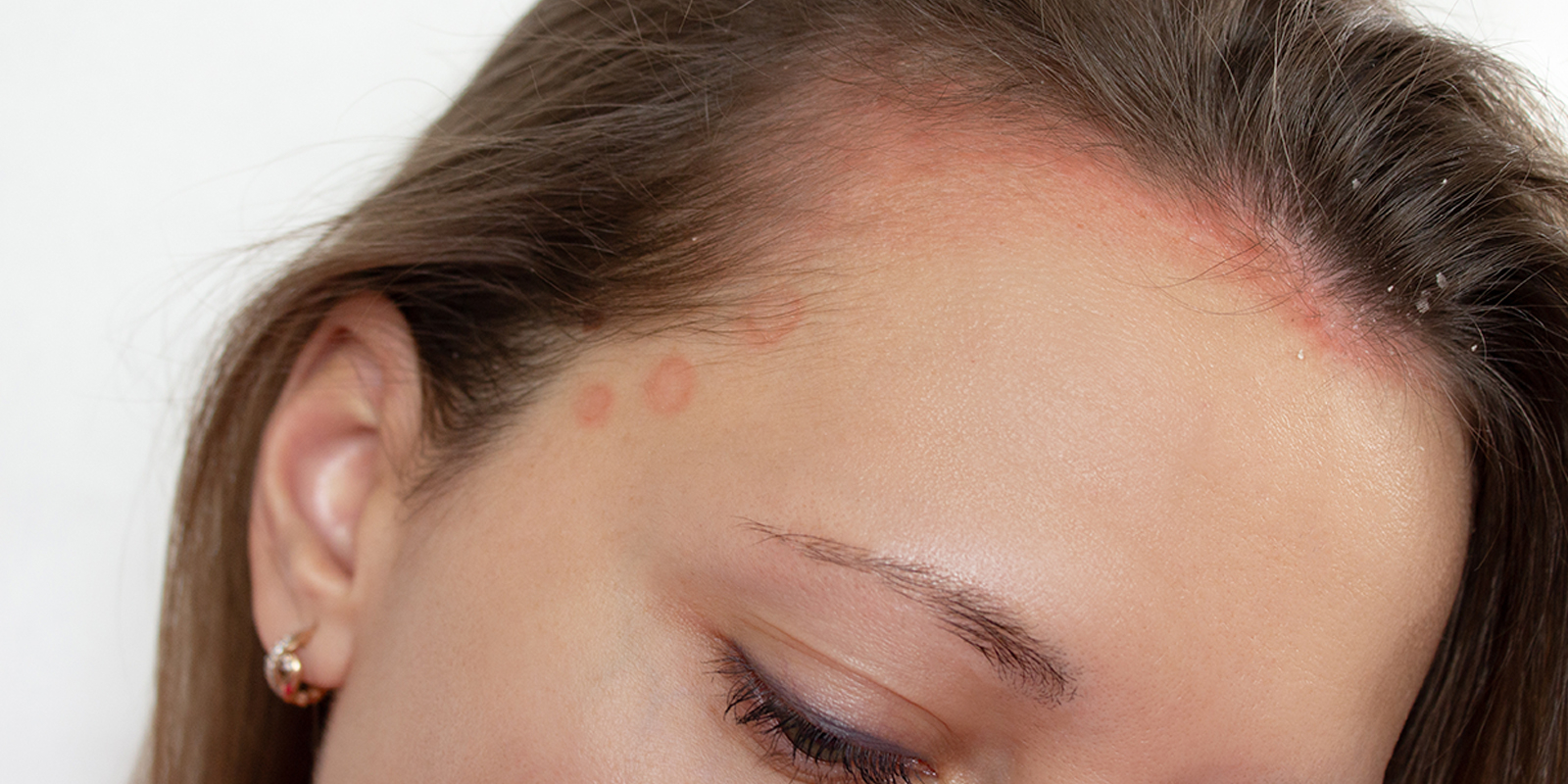
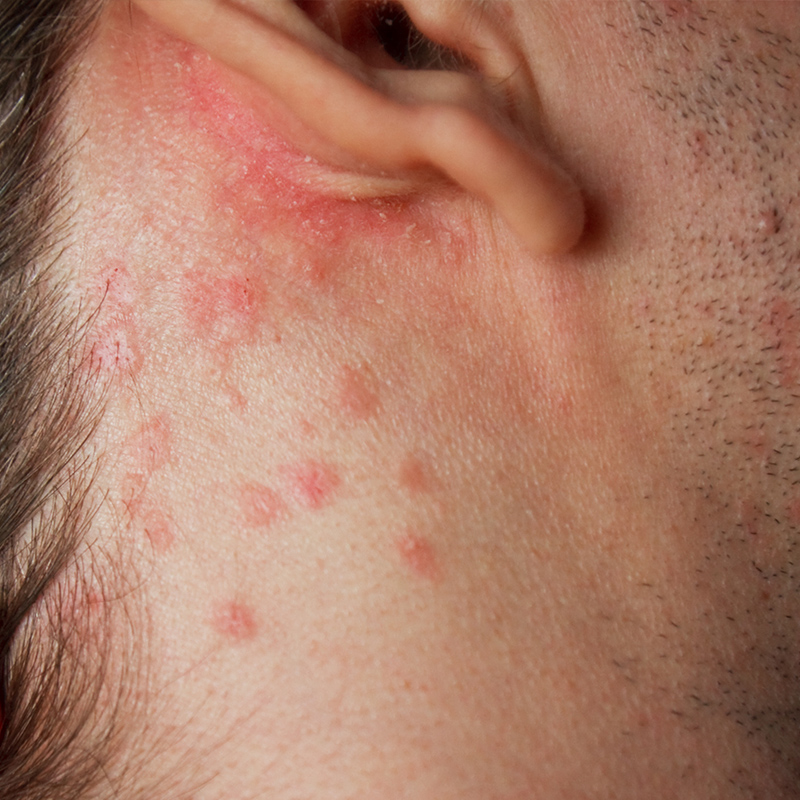
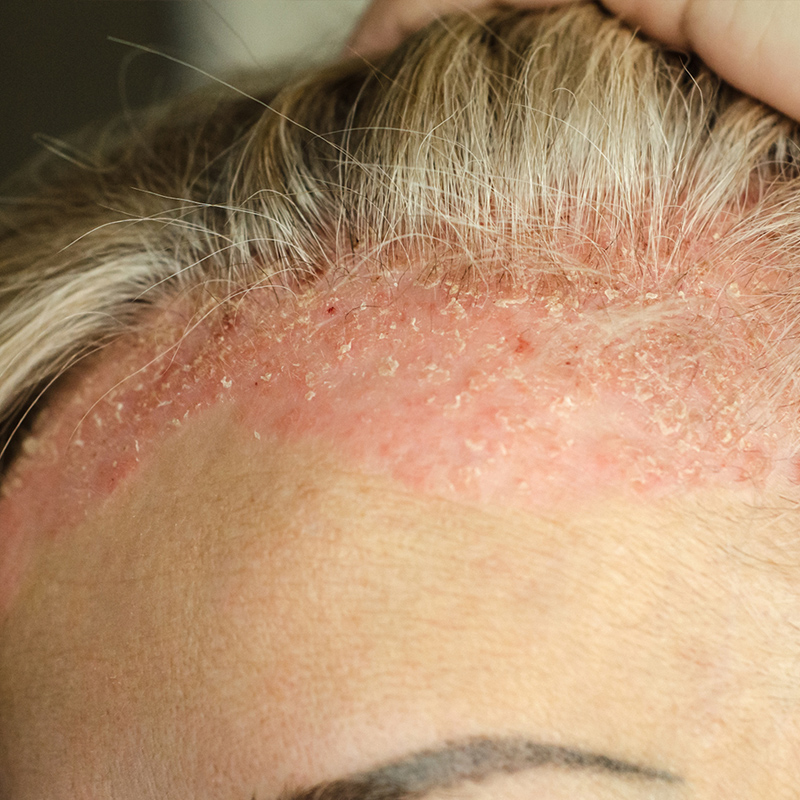
How to treat scalp psoriasis?
This condition cannot be cured but it can be treated! A good scalp psoriasis treatment will help reduce the frequency of flare-ups, sometimes by several months or years.
The location of plaques may vary. Sometimes psoriasis disappears completely from the scalp. But there is always the risk of recurrence, so you should pay careful attention the quality of the products you apply to your skin and scalp.
Your doctor can prescribe effective treatments and shampoos to use during flare-ups. Then it is up to you to continue with targeted products available at pharmacies or health and beauty stores.
If you have plaques in places other than your scalp, your treatment for scalp psoriasis must be customised by your doctor or dermatologist based on your symptoms. Relaxation techniques will help you better deal with this disease and the itching that comes along with it. These techniques include meditation, sophrology and yoga.
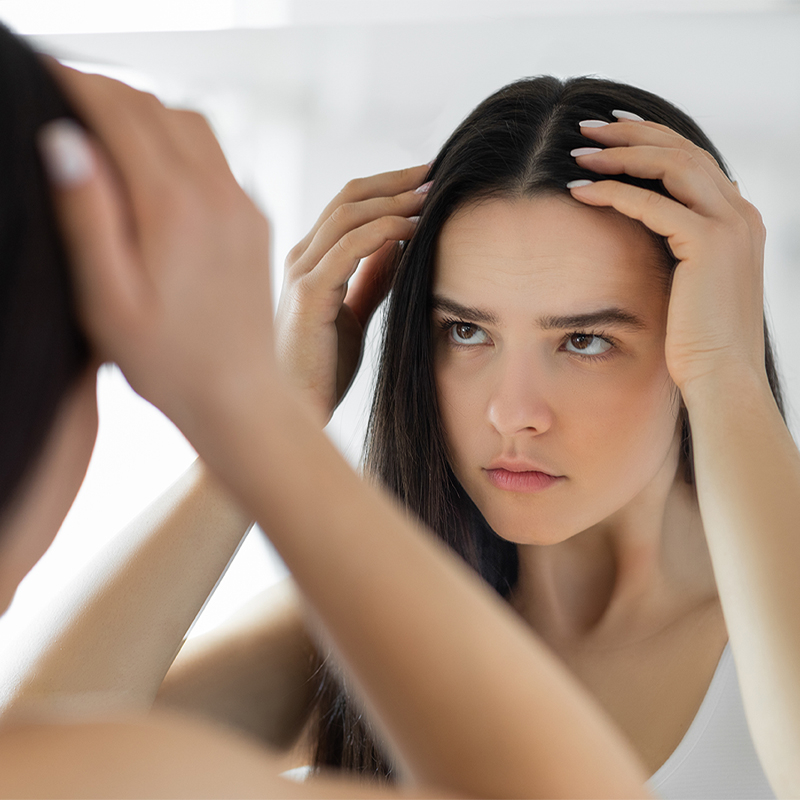
Tell your hair stylist about your scalp psoriasis.
How does psoriasis affect your hair?
In principle, scalp psoriasis does not prevent hair from growing, even if it is trapped in plaques.
However, if you scratch your scalp, you will weaken your hair, causing it to break more easily and potentially fall out. Plus, scratching can cause wounds that can become infected. Do your best to avoid all potential sources of friction or irritation in your daily life.
Here are five habits that will help you reduce the impact of psoriasis on your life:
- Use a gentle shampoo (often called kerato-reducing). Some are designed to reduce itching and are specially developed for people with dry, sensitive scalps. You can wash your hair often if you use the right shampoo.
- Let your hair air dry or set the hairdryer to cold or warm air so you do not irritate your scalp. Use soft brushes.
- Avoid tight hairstyles that pull on your scalp like braids or ponytails. You should also avoid beanies, hats and caps.
- If you colour your hair, postpone your dye or balayage if you are having a flare-up. Always test chemical products and dyes beforehand to ensure they do not cause a reaction (watch out for ammonia), especially if your scalp is sensitised.
- Don’t be afraid to take your usual shampoo to the hair stylist, because just one application of an irritating product can trigger a psoriasis flare-up. Talk about your condition with your stylist because they often know about this issue. Recommend that they reduce the hairdryer temperature and avoid extended blow-drying.
Three things to remember about scalp psoriasis:
- Psoriasis functions in alternating flare-ups and remission, sometimes with extended lulls.
- The disease has a genetic origin, but flare-ups are triggered by epigenetic factors. This means that it can be linked to the environment, stress, alcohol, infection, certain medications, etc.
- Scalp psoriasis is not contagious at all, but it is still better to notify your hair stylist before your appointment.


.jpg)