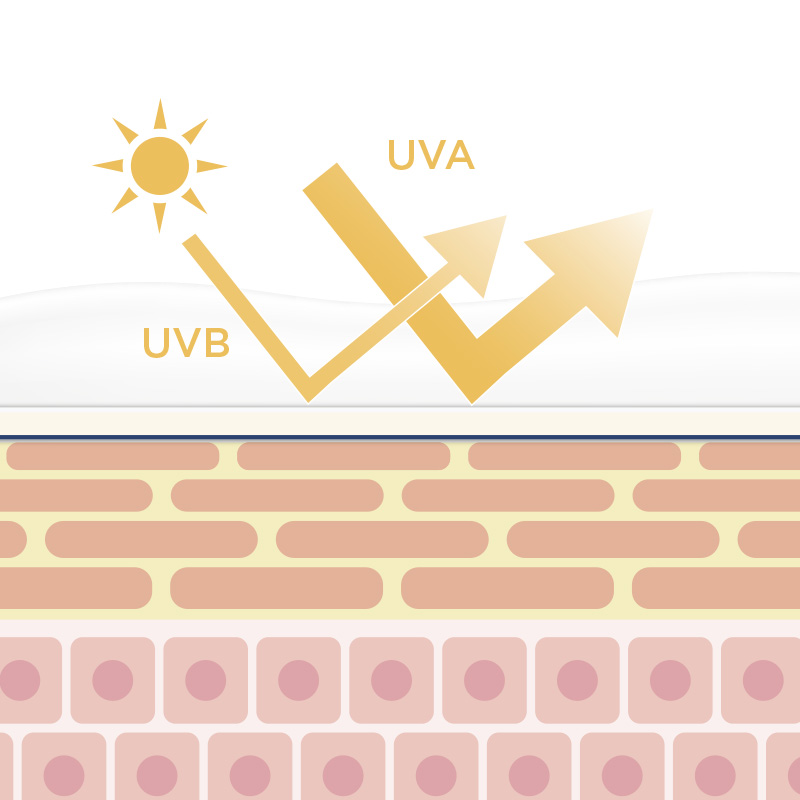
How does solar radiation function?
The sun emits infinite light rays of various wavelengths, from the shortest to the longest. It also emits cosmic rays, gamma rays, X rays, ultraviolet (UV) rays (including UVC, UVB and UVA rays), visible radiation, infrared radiation (IR) and radio waves.
The most dangerous part of a solar ray is filtered by the atmosphere. Two-thirds of this ray reach the earth. Cosmic rays, gamma rays, X rays and UVC rays, incompatible with life, do not reach its surface. The rays that make their way to us (UVB, UVA, visible and infrared rays) influence the body. Infrared rays give off heat; these rays make skin feel hot, as opposed to UVB and UVA rays that are invisible and cold but still have a large biological effect.
Why is sun protection necessary?
Solar radiation has destructive effects on the skin that range from solar erythema (sunburn) to accelerated skin ageing and skin cancer. Sun exposure is the leading cause of skin cancer, which is radiation’s most serious consequence. But you must also keep in mind that there are other risks, such as heat stroke, sun stroke, photosensitivity, ophthalmia and sun allergy.
- The epidermis stops 85% of UVB rays; only 15% reach the dermis.
The quantity of UVB rays depends on the season, latitude, time of day and altitude. These are the rays that cause tanning and sunburn, which is the skin’s natural alarm indicating it’s receiving too many UVB rays. UVB rays have a carcinogenic effect over the long-term. .
- UVA rays penetrate deeply into the skin; nearly 50% of them reach the dermis.
The sun emits these rays year round and they pass through clouds and windows. They are responsible for skin ageing (photoageing) and cause free radicals to form. These molecules attack cell structures and DNA. They have a carcinogenic effect, but to a lesser degree than UVB rays.
UV radiation depends on what part of the earth it hits
Different areas diffuse varying amounts:
- Snow reflects 80% of UV rays, sand 15% and water 25%.
- Even 40 cm below water, UV radiation exposure is still about 40% of what it would be on the surface.
UVA and UVB rays cause skin cancer because they weaken the skin’s immune defenses, triggering significant oxidative stress and creating lesions on the DNA that can cause cancer cells to appear.

.jpg)