REDUCE THE URGE TO SCRATCH BY 88% WITH OUR NEW ATODERM AD INTENSIVE BALM SHOP NOW

Everything You Need to Know About Your Child’s Atopic Skin

Reading time : 5 min

Child's back


You might feel like you're in the middle of an epidemic… As soon as anyone mentions atopic dermatitis (more commonly called atopic eczema), it's surprising to hear how many parents deal with it. In developed countries, it is estimated that 10 to 20% of children will develop signs of atopic dermatitis at some point in their life.
Even if the causes are open to discussion – modern food, environment, pollution? –the number of children affected by atopic eczema is only going up. This chronic skin disease makes daily life difficult for the whole family, and often only goes away in adulthood (but not always…). Providing appropriate care for it means understanding it first. What is going on in your child's skin?

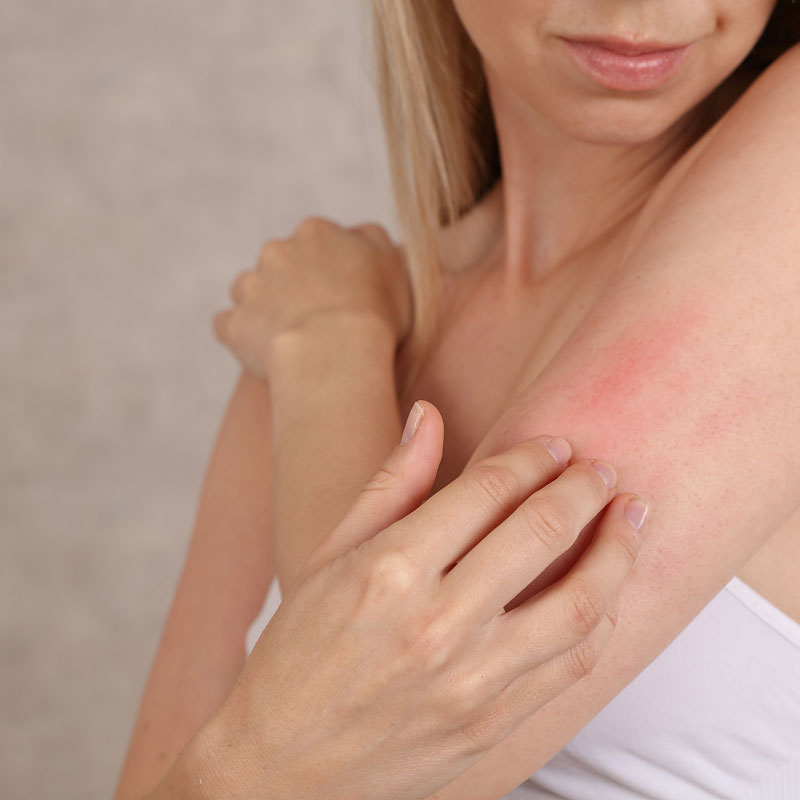


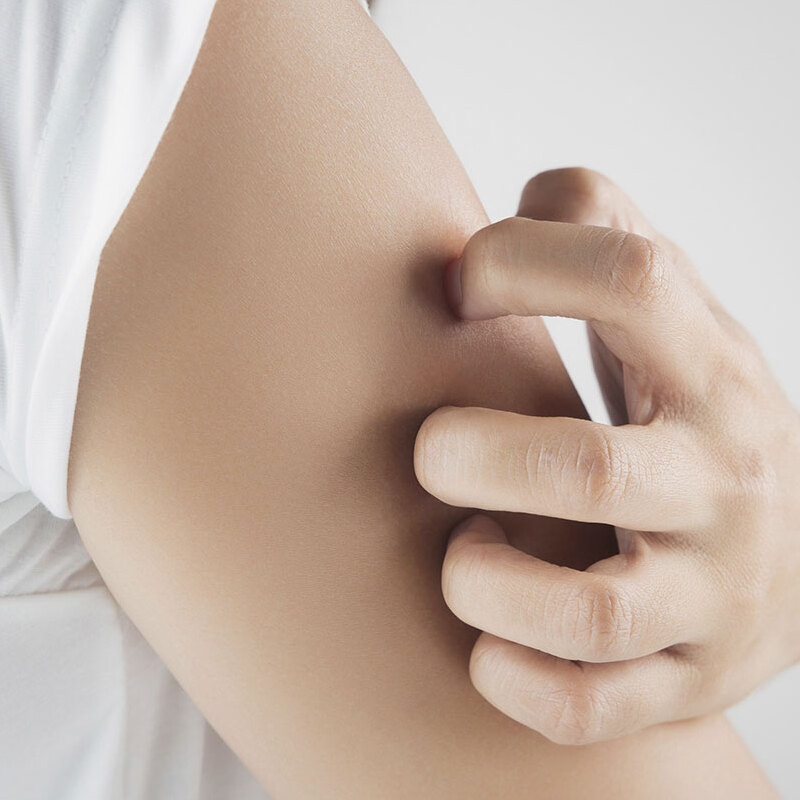
woman itching her arm

How to recognise eczema on your child?


Does your child have very dry skin on their cheeks and arms, sometimes with scaly patches or areas of redness that flare up? Do they scratch frequently, seem uncomfortable, cry more often or have difficulty falling asleep?

These can be signs of atopic eczema, also known as atopic dermatitis. If you notice these symptoms, it’s best to speak to your doctor or healthcare professional, who can assess your child’s skin and recommend appropriate treatment.


Signs to watch out for:

  • Scratching, caused by itchiness, is one of atopic eczema's main symptoms.
  • Most often, the skin disease appears in babies around 3 months old. Red eczema patches appear on his cheeks first, and on his arms, legs, scalp and seat.
  • As your child grows, after 12 months, the patches move to folds in the skin (neck, back of his knees, inside the elbows, behind the ears), around the mouth and on the hands.


Atopic eczema has two main phases:


itching

Flare-Ups

  • Patches appear on the skin, pink at first and becoming more and more red and bumpy.
  • The skin's inflammation makes it intensely itchy. If your child scratches, the inflammation gets worse, making it even itchier and increasing the risk of infection.
  • Scratched enough, the patches will secrete fluid. You can observe the little blisters of liquid (vesicles) and small crusts forming. The whole area can even swell (œdema). It's at this stage that the risk of bacterial infection (golden staphylococcus) is at its highest. And it's also when your child most wants to scratch!
  • Scratching produces small sores that complicate the situation further.

a woman itching her arm

Calming Down

  • Anti-inflammatory treatments (topical corticosteroids) heal the skin and make patches fade, but the skin is still dry.
  • Itchy sensations are still present even without eczema patches. There is still micro-inflammation in the skin. It needs to be hydrated DAILY with emollients.
  • After a few weeks, a new flare-up occurs, without necessarily being able to tie it to an event that set it off. Flare-ups and calm periods cycle back and forth, and good hydration makes it possible to space out the flare-ups.


It's really itchy…


Eczema has a real impact on quality of life because of the ongoing discomfort of itchiness. It can be particularly intense – unbearable, even. You need to be understanding when your child is annoyed or grumpy, when they can't sleep or can't concentrate at school. You do have solutions available to help your child and soothe their itch.


What is happening on your baby's skin?


dry skin

1. Skin is very dry and is lacking both in water and lipids.
> It needs to be nourished with a complete hydrating treatment.


2. Skin poorly performs its barrier role. The outermost layer is more permeable.
> Skin needs to be protected from micro traumatisms that can impair it even more, like permanent scratching, or hygiene that is too aggressive.


a woman itching her arm


3. Skin lets allergens in (exterior factors such as dust, dust mites…) and becomes progressively more sensitive, which provokes an excessive and unjustified reaction by the immune system.
> It's impossible to eliminate all allergens at home, let alone elsewhere, but we can control aggravating factors.


4. Your child's organism defends itself from the pseudo-attack by setting off a skin inflammation – the eczema flare-up that you see.
> Topical corticosteroids are perfectly legitimate at this stage to calm the inflammation.


The causes: where does eczema come from?


There is a hereditary element…


A favourable genetic environment exists where atopic dermatitis can develop. Families susceptible to eczema are more sensitive to environmental allergens. The risk of a child developing eczema is 30% if one parent currently suffers from it or did in the past, and 70% if both parents have or have had eczema².


The environment's role


Hereditary background plays a role, but can not explain on its own the explosion in the number of cases over the past 40 years. Some talk about our excessive hygiene in modern society, especially in cities, where children no longer receive early exposure to allergens. Too much water on the skin, housing that is poorly ventilated (dust mites) and too well insulated, exposure to cigarette smoke and urban pollution… Poorly stimulated, their immune system is disturbed.


The four questions that all parents ask


The good news is that only 4% of adults over 15 years old suffer from eczema⁵. In the vast majority of cases, it disappears during childhood.


NO: You can see eczema but it can't be transmitted to peers.


NO: As long as eczema flare-ups are properly treated and the skin is hydrated everyday. The main risk is infection.


NO: Not necessarily. An allergy and immune system review will shed no new light on eczema flare-ups, except if local treatments that have been properly followed have failed, and if there is stunted growth. Some doctors advise having one done to detect other latent atopic pathologies, such as asthma and in rare cases food allergies.


NO: But it's difficult to live with. Three categories have been defined to evaluate eczema: mild, moderate and severe, according to intensity, type of symptoms and impact on quality of life. Among specialists³, an atopic child's quality of life is comparable to that of a child suffering from asthma or diabetes. For 96% of doctors⁴, eczema affects both children's as well as their loved ones' quality of life: treatment, food, living conditions, sleep, stress… Don't hesitate to consult a dermatologist to receive help and answers for all your questions.


Sources


¹Biedermann T, Skabytska Y, Kaesler S, Volz T. Regulation of T-Cell Immunity in Atopic Dermatitis by Microbes: The Yin and the Yang of Cutaneous Inflammation. Front. Immunol 2015; 6: 353
²Atopic Dermatitis – S.A. Büchner, Swiss Medical Forum n°19, May 2001
³Atopic Dermatitis – John Libbey Eurotext – December 2017
⁴Guillet G, Cambazard F. ATOPIA Study: European epidemiological dermo-paediatric survey, overview of results: The influence of environment, lifestyle and type of treatment for dry skin with an atopic tendency among newborns, infants and children. TAP January 2006 – 10th Practical Paediatrics Congress Paris.
⁵Wollenberg A, Oranje A, Deleuran M et al. ETFAD/EADV Eczema Task Force 2015 Position Paper on Diagnosis and Treatment of Atopic Dermatitis in Adult and Paediatric Patients. / Eur Acad Dermatol Venereol 2016; 30: 729-47