Redness, flaking and dry patches on the face, scalp or body are often signs of chronic skin conditions such as seborrhoeic dermatitis or psoriasis. These two inflammatory skin disorders commonly affect people with sensitive or reactive skin, causing discomfort and visible irritation that may require ongoing treatment and care.
Sensitive skin
Understanding Psoriasis and Seborrhoeic Dermatitis: Causes, Symptoms, and Treatments
Reading time : 6 min
%20(2)%20(1)%20(1).jpg)
.jpg)
What are the signs of seborrhoeic dermatitis?
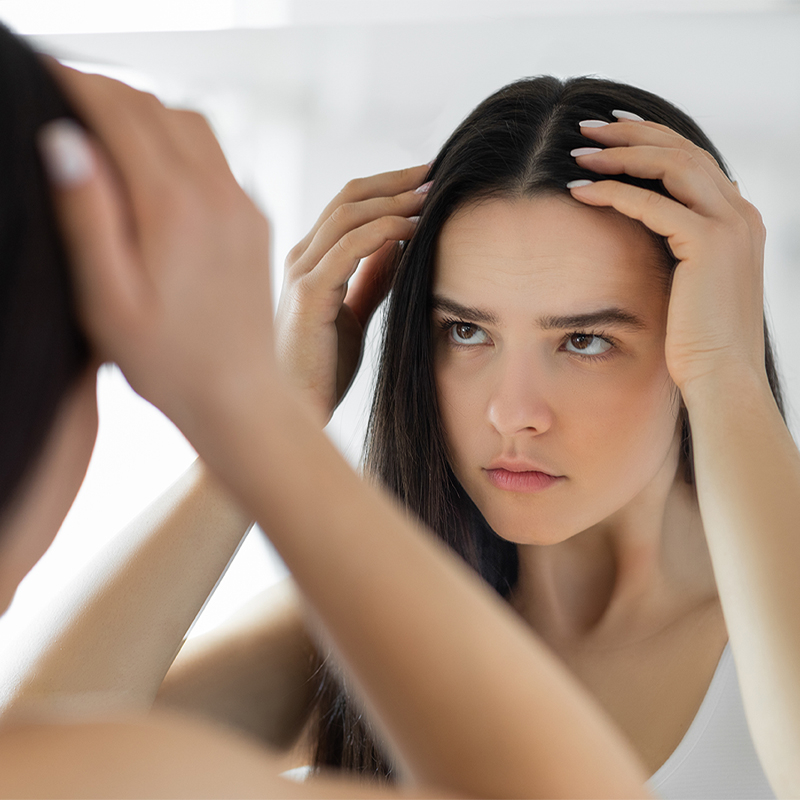
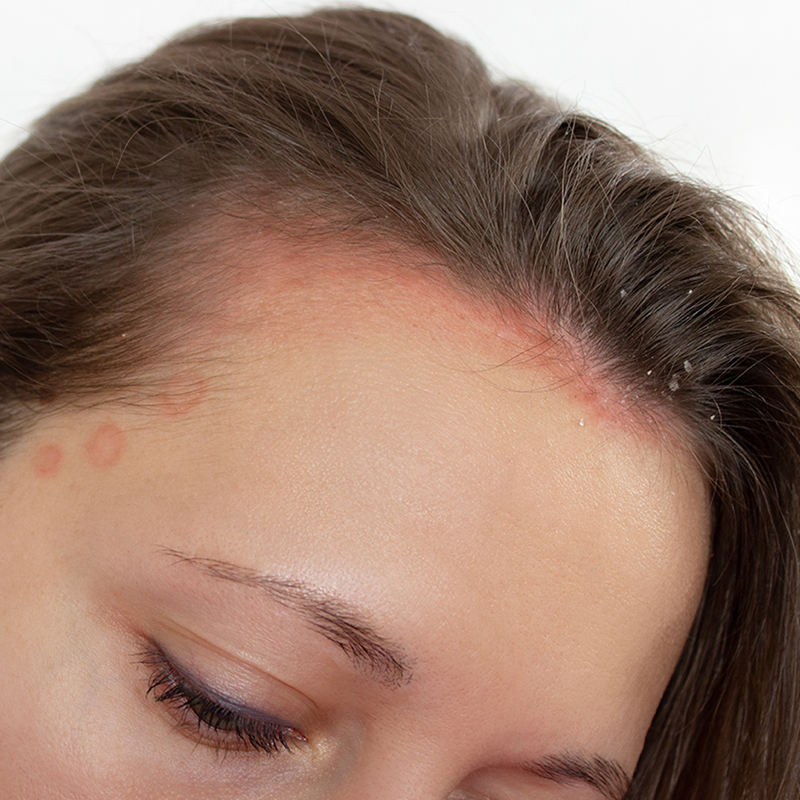
Seborrhoeic dermatitis is a chronic inflammatory skin condition that commonly affects the scalp and face, leading to redness, flaking and scaly patches.
On the face, it typically appears in oily areas rich in sebaceous glands, such as the sides of the nose, nostril folds, nasolabial folds, eyebrows, the area between the eyebrows and the external ear canals. The scalp is the most frequently affected area, where seborrhoeic dermatitis causes inflammatory dandruff that can spread beyond the hairline onto the forehead.
Other hair-bearing areas may also be involved, including the eyelids (causing blepharitis), beard, chest and pubic region in men. The scales on the scalp are often yellowish, oily and loose, unlike those seen in other scalp conditions.
Seborrhoeic dermatitis usually follows a recurrent pattern, with flare-ups alternating with periods of remission. Symptoms often worsen in winter and may be triggered by stress, cold weather or changes in humidity. Common signs include itching, burning sensations and general skin discomfort.
Who is affected by Seborrheoic Dermatitis?
Seborrhoeic dermatitis is a common skin condition that affects around 3% of adults, particularly young adults. It can also appear in infants, with up to 71% experiencing temporary symptoms. In babies, seborrhoeic dermatitis typically presents as “cradle cap”, a harmless but noticeable yellowish, scaly rash that forms on the scalp and sometimes behind the ears.
While seborrhoeic dermatitis in infants usually clears on its own within a few months, in adults it tends to be chronic and recurrent, often requiring ongoing skincare or medical treatment to manage flare-ups.
What causes Seborrhoeic Dermatitis?
Although seborrhoeic dermatitis can sometimes develop alongside other health conditions, it most often appears in healthy young adults.
Several factors contribute to its onset and recurrence:
- Excess sebum production, which creates an oily environment on the skin.
- An abnormal immune response to naturally occurring skin yeasts (such as Malassezia), which can irritate and inflame the skin
- The chronic and recurring nature of the condition, which leads to redness, flaking, and dandruff - particularly on the face and scalp.
Seborrhoeic dermatitis can cause itching, burning sensations and visible irritation, often leading to social and emotional discomfort as well as physical symptoms.
What are the signs of psoriasis?
Psoriasis is a chronic, non-contagious skin condition that affects around 2–3% of the population and can develop at any age. It occurs when the skin’s cell turnover accelerates, leading to the formation of thick, scaly plaques on areas such as the elbows, knees, scalp and lower back.
Psoriasis patches are red (erythematous) and covered with thick whitish scales. They are very clearly defined compared to healthy skin.
Psoriasis most commonly affects the elbows and knees, areas prone to microtrauma and friction, but it can appear anywhere on the skin. The scalp is frequently involved, especially the occipital region (the back of the head) and may cause flaking, redness and thick scaling.
When psoriasis affects the skin folds such as the groin, armpits or under the breasts, it is known as inverse psoriasis. This form tends to be less scaly but often more uncomfortable, causing itching, irritation or burning sensations in these sensitive areas.
The nails can also be affected, showing signs such as thickening, pitting or deformation.
Beyond visible skin changes, psoriasis can have a significant impact on quality of life, particularly when it is widespread or affects socially sensitive areas. In some cases, psoriasis is also linked to psoriatic arthritis (psoriatic rheumatism), which occurs in around 25% of people with psoriasis. This can cause joint pain and stiffness, affecting the spine (axial involvement) or smaller joints such as the fingers and toes (peripheral involvement).
Do you know your skin concern?

Who is affected by psoriasis?
Psoriasis can affect men and women of all ages, but it most commonly develops in young adults. Around one in three cases begin before the age of 20, and many people experience their first symptoms between the ages of 20 and 40. Although the condition can appear at any stage of life, early onset is often linked to a stronger genetic predisposition.
What causes psoriasis?
Psoriasis is a multifactorial skin condition influenced by both genetic and environmental factors. A family history is present in around 30–40% of cases, and while inheritance is not systematic, several genes are involved in increasing susceptibility
At the skin level, psoriasis occurs when epidermal cell turnover accelerates, leading to the buildup of thick, scaly patches. In people with a genetic predisposition, several triggering factors can cause or worsen flare-ups, including:
- Climate changes, particularly cold and dry weather
- Infections, especially throat or respiratory infections
- Psychological stress, which can influence the skin’s reactivity through neuromediators
- Local trauma, such as burns, friction or scratching (known as the Koebner phenomenon)
- Certain medications, including synthetic antimalarials, some blood pressure drugs, lithium salts and specific eye drops
Doctors are aware of these potential triggers, and it’s important not to discontinue any prescribed treatment unless a clear medical link to psoriasis has been proven.
Additionally, some health conditions and lifestyle factors are more common in people with psoriasis, such as metabolic syndrome (characterised by overweight, high cholesterol, high blood sugar and high blood pressure), as well as excessive alcohol consumption and smoking.
What Can I Do to Control Psoriasis and Seborrhoeic Dermatitis?
In some cases, the doctor will look for what caused seborrhoeic dermatitis to appear. In the vast majority of cases, the doctor will prescribe appropriate treatments. People with seborrhoeic dermatitis should use non-irritating products, understand its chronic and recurring nature, and therefore accept the need for maintenance treatment.
The doctor will first assess the scope of the psoriasis, its repercussions, and whether or not there is a metabolic syndrome or excessive consumption of alcohol or tobacco. He or she verifies whether there is rheumatism and if a triggering factor or facilitator can be found.
It is critical to stop scratching since it promotes patches. Stopping toxic factors (alcohol, tobacco) is more than desirable.
Few cases of psoriasis resist therapy, since there are a wide variety of treatments tailored to the various forms. But fortunately, most cases of psoriasis are mild to moderate in scope and do not require any “heavy” treatment. In that sense, local treatments are usually sufficient but need to be applied regularly for this chronic condition. If treatment is discontinued, the lesions reappear.
It’s important to remember that Seborrheoic Dermatitis and psoriasis are not contagious diseases. The first line of prevention is to limit factors that trigger or facilitate the condition, such as scratching, which leads to scales and irritating or unsuitable products.
For psoriasis, you should also avoid temperature variations and cold.
The two diseases are generally improved by sun exposure and sea swimming. While SD and psoriasis are difficult to heal completely, one should not give in to discouragement. Remember that regular treatment will provide prolonged remission and greatly improve your quality of life.
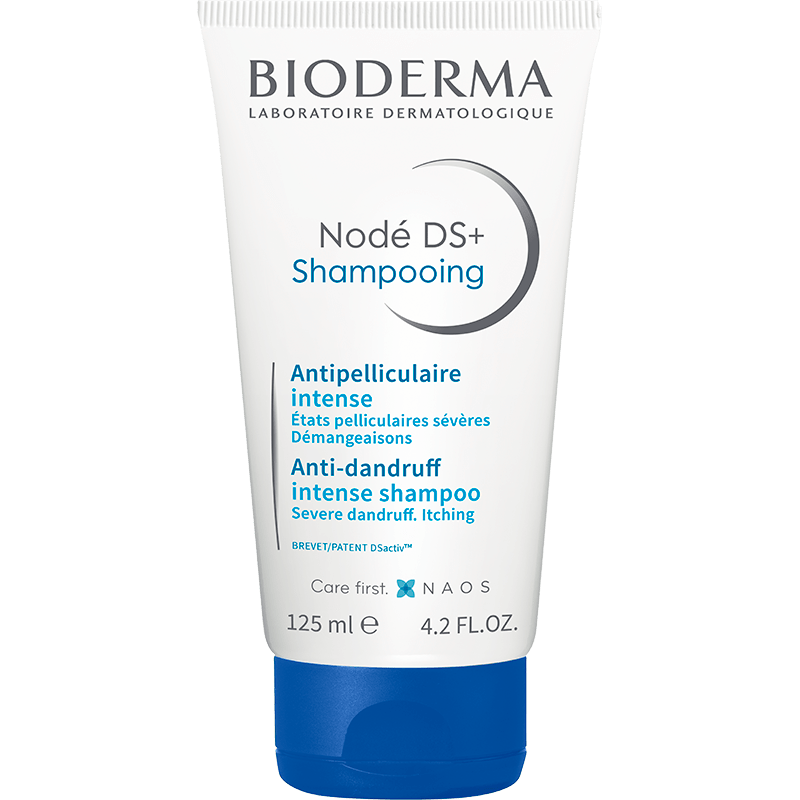
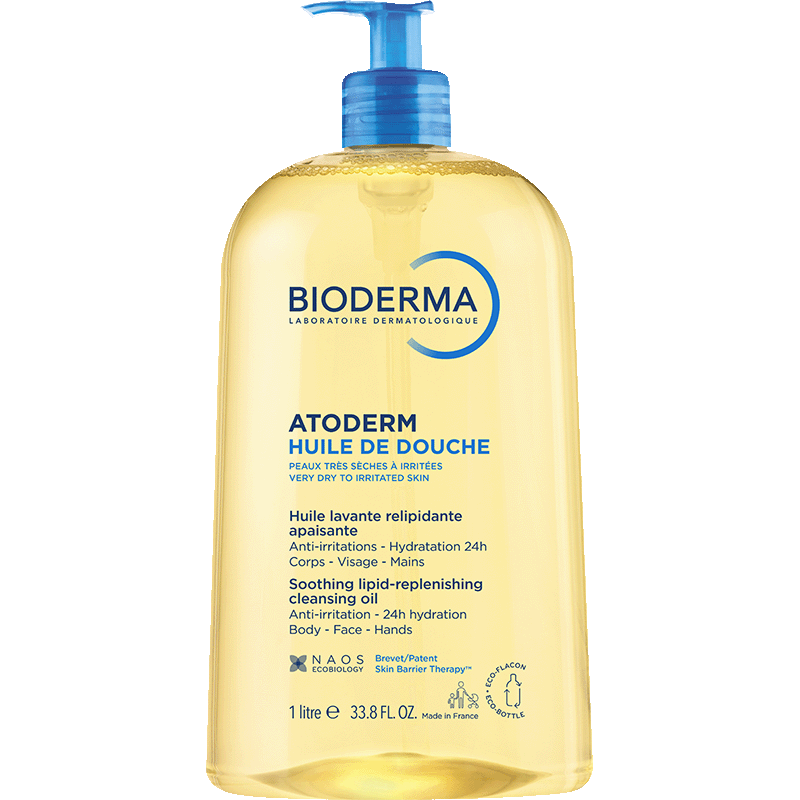
Use a gentle, ultra-high-tolerance soothing cleansing product that is fragrance-free, preservative-free and surfactant-free. Dry your face carefully, without rubbing. Follow this link to learn more about hair and scalp products for treating seborrhoeic dermatitis or psoriasis.
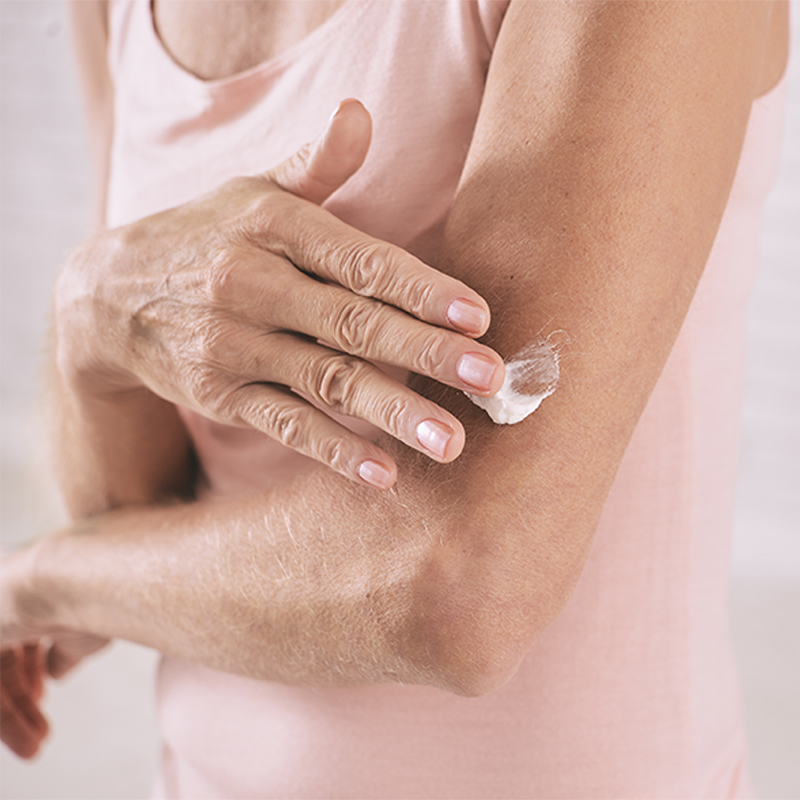
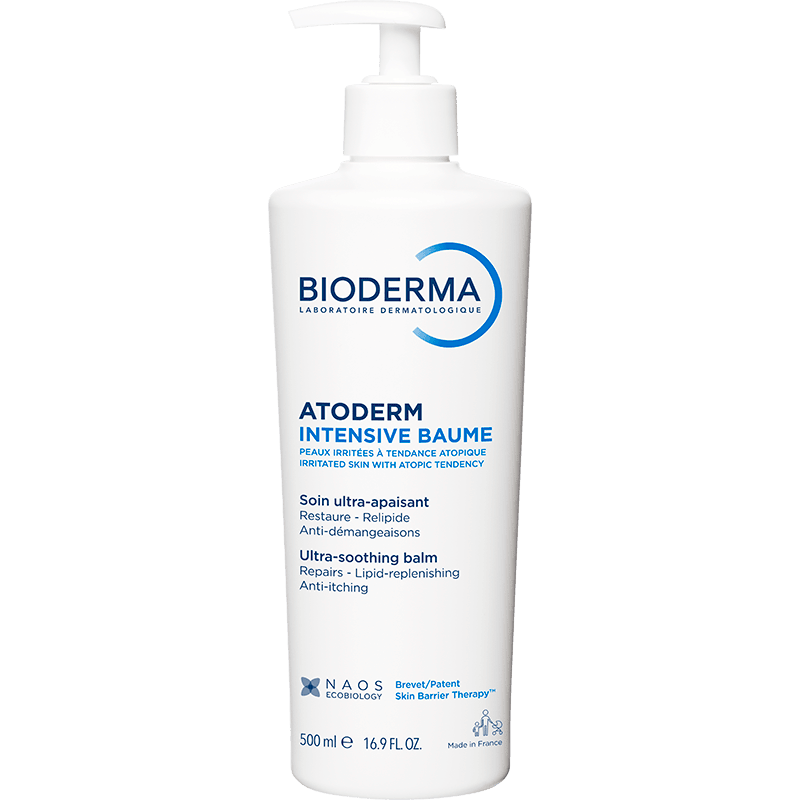
Hydration is essential if you have scales. Once or twice a day, gently apply an ultra-high-tolerance care that targets skin reactions. It should be fragrance-free, preservative-free and surfactant-free.
You can apply an intense moisturising mask once or twice a week. Once you see an improvement, it’s important to continue the programme for several months.
If you have visible redness, you need to control skin dryness caused by winter cold and work harder to maintain effective skin moisture, from your head to your toes.